What Happens If Your AI Feature Causes a HIPAA Breach?
An AI caused HIPAA breach carries real legal and financial consequences. Here is what happens next, and how to avoid finding out the hard way.


This is some text inside of a div block.
An AI caused HIPAA breach carries real legal and financial consequences. Here is what happens next, and how to avoid finding out the hard way.
An AI feature does not need to be malicious to cause a HIPAA breach. A misconfigured retention setting, a prompt that pulls more context than intended, a cross patient contamination bug nobody caught in testing, any of these can trigger the same legal and financial process as a traditional data breach, and most teams have never walked through what that process actually looks like until they are already living it.
HIPAA's Breach Notification Rule requires notifying affected individuals and the Department of Health and Human Services within 60 calendar days of discovering the breach, a firm deadline rather than a target to aim for. If the breach affects 500 or more people in a single state or jurisdiction, prominent media outlets in that area must be notified as well. Proposed updates to the rule would shorten the window for notifying HHS specifically to 72 hours for larger breaches, which reflects the direction enforcement is moving, toward faster expected response, not slower.
Penalties are assessed in tiers, ranging from violations an organization could not reasonably have avoided despite genuine care, up to willful neglect that was never corrected. In 2026, per violation penalties range from roughly 141 dollars up to over 2.1 million dollars, with the tier assigned depending heavily on whether the organization can demonstrate a current risk analysis, documented policies, and prompt corrective action once the issue was found. An AI caused breach at a platform with no risk analysis covering its AI features at all sits in a very different tier than one at a platform that had already reviewed those features and was actively working through known findings.
Most enforcement cases resolve through a settlement rather than a maximum penalty, but that settlement typically comes bundled with a corrective action plan running one to three years under active OCR monitoring. That means ongoing reporting requirements, documented remediation, and continued oversight long after the original incident is fixed, which extends the real cost of a breach well past the initial fine itself. OCR enforced over 4.2 million dollars in HIPAA penalties in 2024 alone, and enforcement activity has intensified in the years since, with risk analysis failures remaining the single most commonly cited violation across those cases. A corrective action plan is also not a private matter. Resolution agreements are typically published, which means the details of what went wrong and what the organization is required to fix become part of the public record for anyone, including future customers and prospects, to review.
The financial penalty is often the smaller part of the total cost. Breach notification itself carries direct expense, legal counsel, credit monitoring for affected individuals, and the operational work of identifying and contacting everyone involved. Enterprise deals in progress tend to stall while a prospect's security team reassesses the vendor relationship. Existing customers ask harder questions, and some do not stay. In behavioral health specifically, a breach involving therapy notes or substance use disorder records carries a reputational cost that outlasts the financial one, since it touches exactly the kind of sensitive information patients trusted the platform to protect.
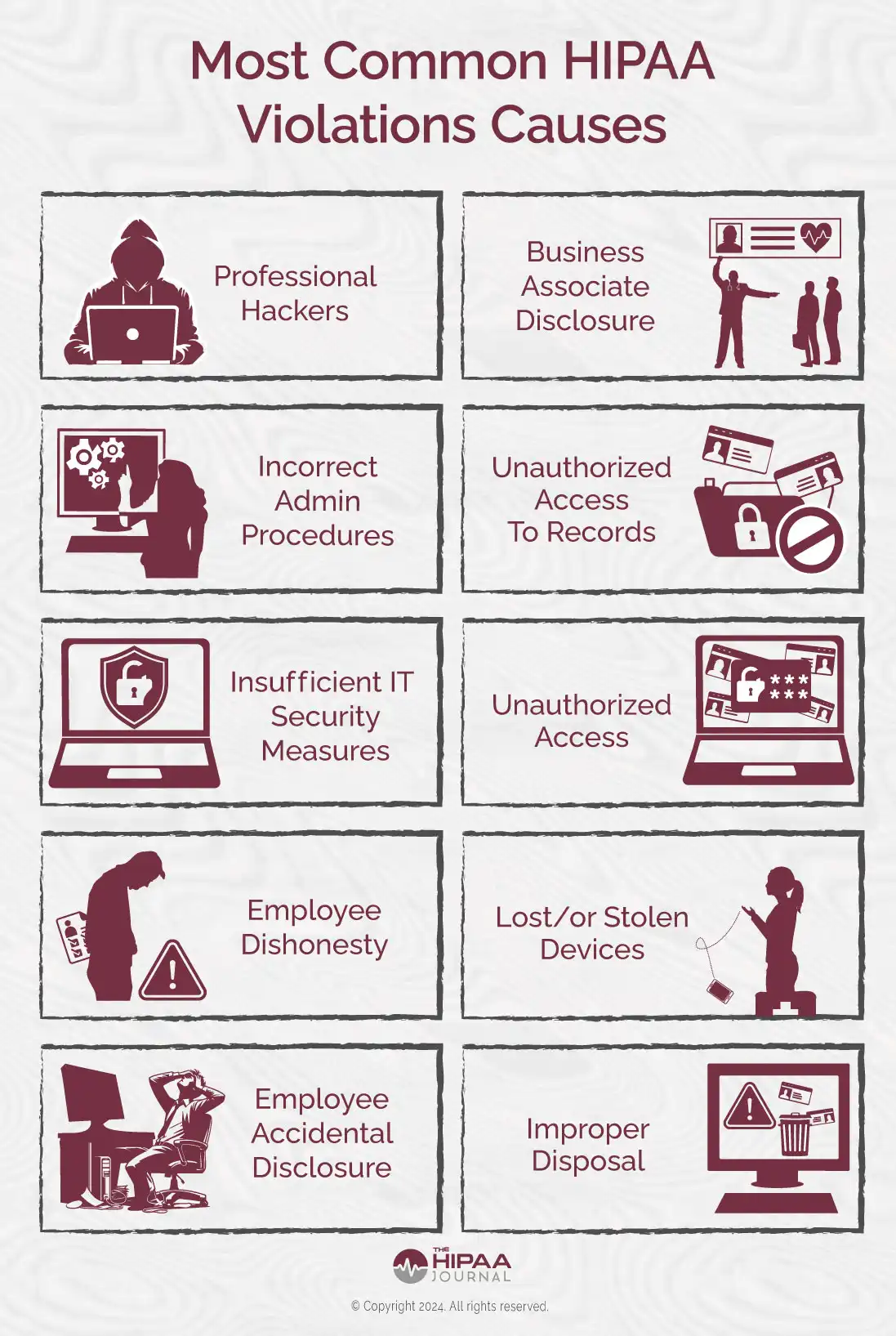
A behavioral health platform's AI summarization feature has a scope bug in its retrieval logic that occasionally pulls a small excerpt from another client's session note into a summary generated for a different clinician. The bug goes unnoticed for several weeks until a clinician flags an unfamiliar name in a summary and the engineering team traces it back to the retrieval query. What started as a subtle logic error now triggers the full breach response process: determining how many patients were affected, whether the exposure meets the reporting threshold, notifying HHS and affected individuals within the required window, and preparing for likely OCR scrutiny given that this specific failure mode, cross patient contamination, is exactly the kind of thing a pre launch adversarial test is designed to catch before it ever reaches production.
The immediate response matters as much as the eventual fix. Contain the exposure first, cutting off whatever access or data flow caused it. Document what is known and what is still being investigated, since that record becomes part of the eventual OCR filing. Loop in legal counsel early, since breach notification obligations and their exact triggers are specific enough that guessing wrong compounds the problem. And resist the instinct to make public statements before the scope of the incident is actually understood, since a correction to an early statement often causes more damage than a delayed but accurate one.
The entire process above assumes a breach has already happened. The more useful position is finding the same gaps a breach would have exposed, before they cause one. That means the same risk analysis, vendor verification, and adversarial testing that a proactive review provides, which is what our AI Acceleration Sprint is built around, finding an exposure within the first two weeks rather than after a regulator does.
A proactive review costs a fixed, predictable amount. A real breach costs an amount that is genuinely difficult to predict in advance, spanning notification, legal fees, potential penalties, a multi year corrective action plan, and lost business, all layered on top of each other. Our pricing page lays out the proactive cost clearly, precisely because the reactive alternative rarely comes with a clean number attached.
Resolve Health Tech runs the review that finds an AI caused exposure before it becomes a breach notification. Contact us to find out where your own AI features stand.
Sana is a Technical Content Specialist at Resolve Health Tech. She specializes in breaking down complex architectural patterns, nearshore hiring trends, and software engineering workflows into actionable, human-friendly guides. Working alongside Resolve Health Tech's tech team, Sana ensures every piece of content is both highly readable and technically precise.